
Seasonal & storage
RV Humidity, Dehumidifiers, and Mold: Why Your Rig Is a Moisture Machine (and How to Dry It Out)

Four people in 250 square feet overnight, breakfast on the stove, two showers — by morning the windows drip. A house vents that moisture away; an RV condenses it on the nearest cold surface and grows mold.
Here's why rigs get wet from the inside, the number to hold, where mold starts, which RV dehumidifier fits, and why winter storage breeds most of it.
Why RVs are moisture machines
Every RV moisture problem is the same equation: water made inside, minus water removed, condensing on the coldest surface. RVs lose on all three.
You are the biggest source. One person exhales roughly 400 grams — just under half a liter — a day breathing. With cooking, dishes, and showers, a family of four turns roughly 2 to 3 gallons of water a day into vapor (8–12 liters). Four to six pints pushes a 1,000-square-foot house from 15% to 60% relative humidity — your rig is a quarter of that volume.
Propane adds water — from unvented flames only. Burning propane makes about 1.6 pounds of water per pound of propane (roughly 0.8 gallon per gallon). The furnace is sealed and vented outside; the stovetop, oven, and portable catalytic or "Buddy"-style heaters dump their moisture inside — that's why windows weep when one runs.
Then it finds a cold surface. Thin walls, heat-conducting aluminum framing, single-pane glass: on a cold night, every window frame and stud line drops below the dew point. Condensation — not a leak.
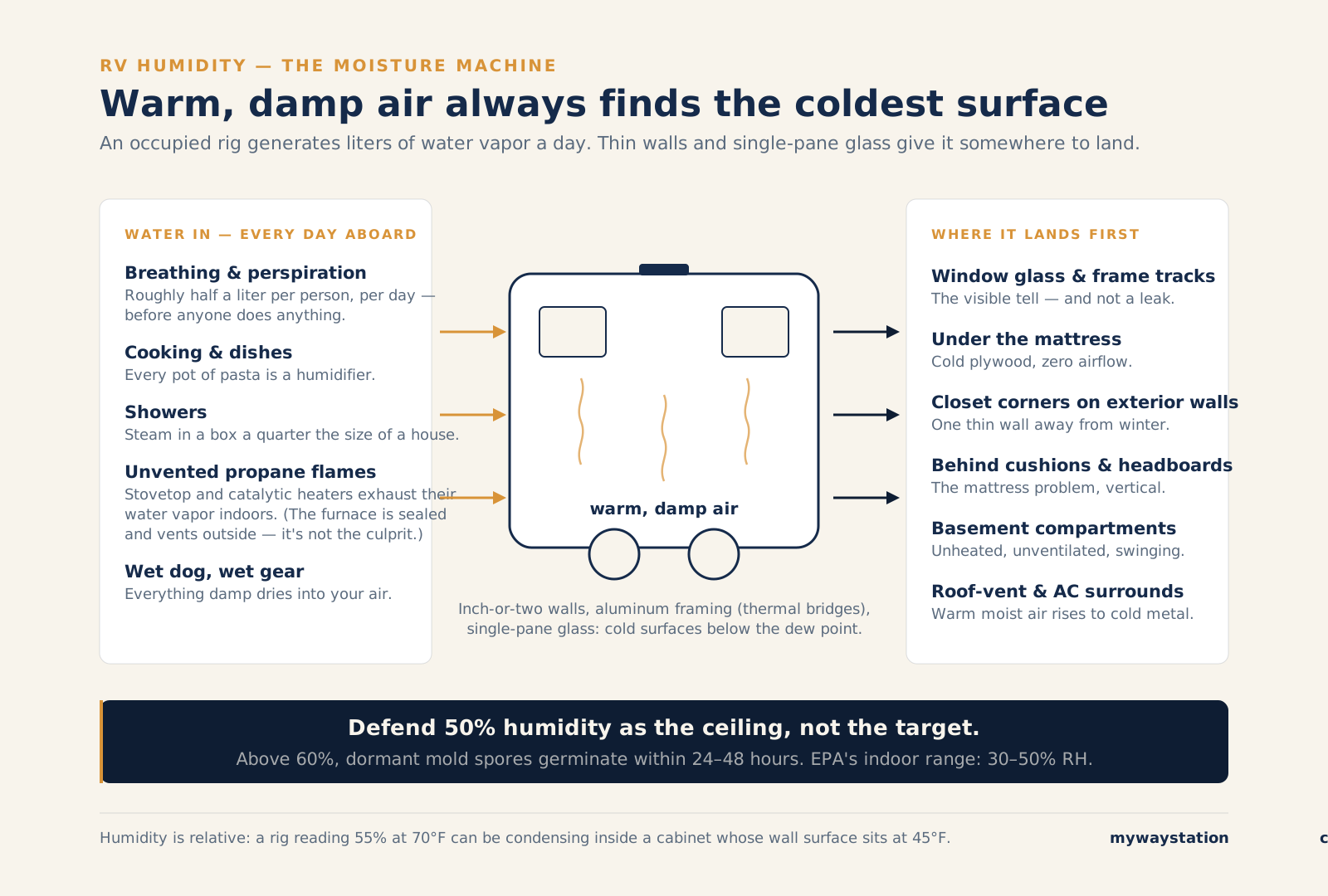
Everything you do inside makes water; thin walls give it somewhere cold to land.
The target: 30–50% relative humidity
The EPA's guidance: keep relative humidity below 60%, ideally 30–50%.
- Above ~60%: dormant mold spores can germinate in 24–48 hours.
- Below ~30%: wood trim cracks and seals dry out — the Arizona-winter problem.
Treat 50% as the ceiling to defend, not the target. Humidity is relative: cold air holds less water, so a rig reading 55% at 70°F can be condensing inside a 45°F cabinet wall — mold in cold corners while the counter hygrometer says "fine."
Where mold actually grows first in an RV
RV mold prevention starts with knowing where to look: humid air meeting a cold surface in still, dark air, not mid-room. In order:
- Under the mattress. The number-one owner-reported spot: night sweat condenses on the cold plywood deck where air never moves. r/RVLiving has a whole thread on it — the OP's proposed fix was pool noodles as DIY airflow spacers; right instinct, spacer matting does it better.
- Closet corners and cabinets on exterior walls. No airflow, one thin wall from winter.
- Window frames and the wall below. Condensation pools in the track and wicks into the wallboard; black gunk in the gasket is the tell.
- Behind cushions and headboards on exterior walls. The mattress problem, vertical.
- Basement and pass-through bays. Unheated, unventilated — plus that damp hose from last fall.
- Roof vent and AC surrounds. Often the coldest surface overhead.
Airflow fights mold as much as dryness does. 55% RH with moving air beats 50% with a mattress flat on cold plywood.
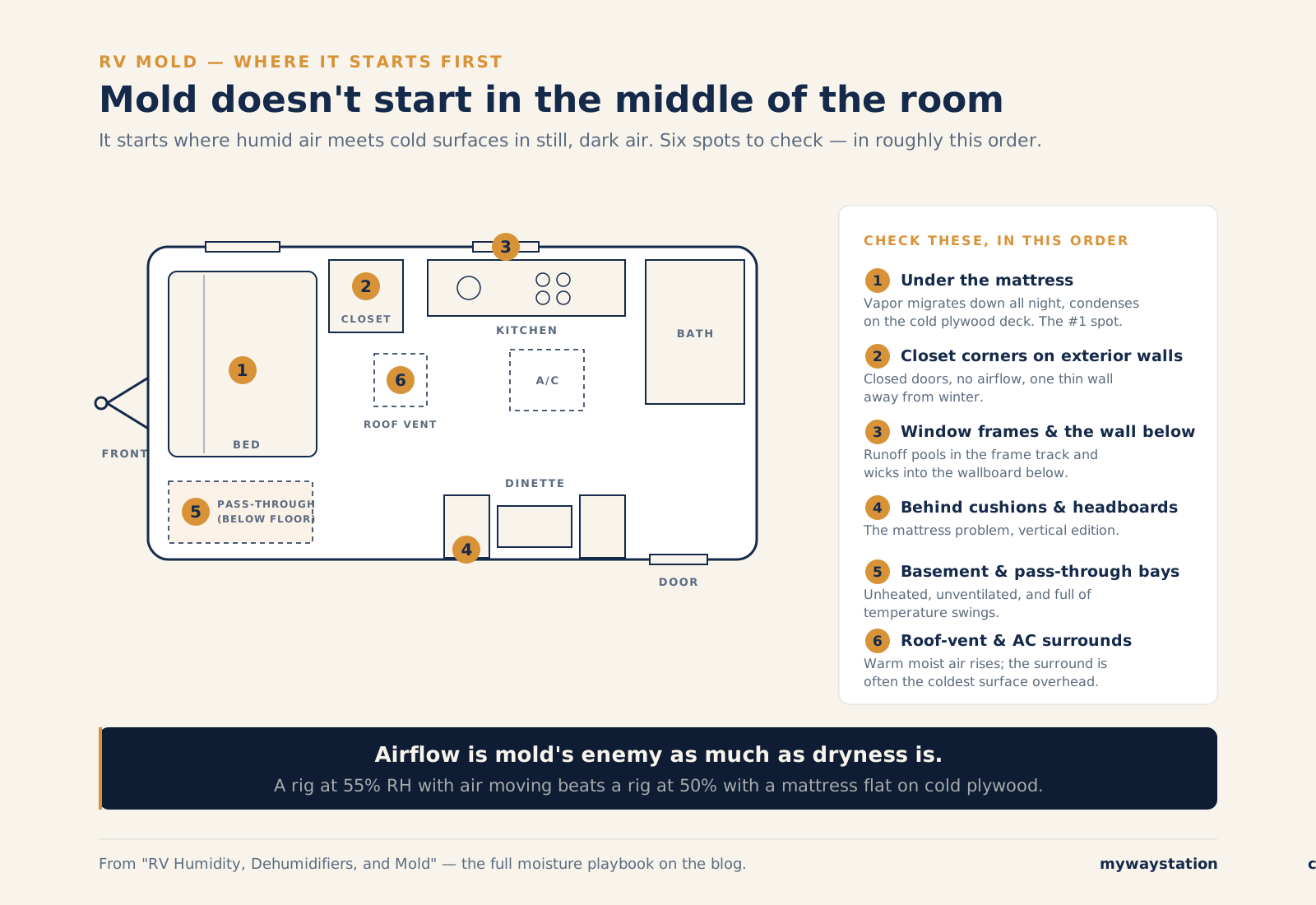
Six spots, one pattern: humid air meeting a cold surface where nothing moves.
RV dehumidifier types: which one fits your situation
"RV dehumidifier" covers four very different machines — and not just cold-season gear: asked what people run in winter, r/RVLiving's u/OldDiehl replied "Winter? What? We use a dehumidifier year round" (thread). The catch: the cheap ones mostly don't work, and the effective ones have a temperature limit.
| Type | Removes per day | Works below ~60°F? | Power | Best for |
|---|---|---|---|---|
| Compressor | 20–50 pints | Poorly — capacity collapses, coils ice | ~300–700W | Occupied rigs in warm/mild weather |
| Desiccant | 10–20 pints | Yes — its whole advantage | ~300–600W | Cold-weather camping, heated winter use |
| Thermoelectric (Peltier) mini | ~0.5–1.5 pints | Barely works anywhere | ~25–75W | A single closet, at best |
| Moisture absorbers (DampRid etc.) | Ounces per day | Yes, slowly | None | Unpowered storage — damage limitation |

Compressor above ~60°F, desiccant below, absorbers only with no power at all.
Compressor dehumidifiers — best for occupied rigs in warm weather
Refrigerated coils condense water from the air, like your AC. In a lived-in rig in a humid summer, a 20–30 pint unit is the most water per watt you can buy. But efficiency drops hard below ~65°F, and below ~50°F the coils ice and defrost cycles cut real-world capacity to a fraction of spec.
Desiccant dehumidifiers — best for cold weather, full stop
A rotating silica-type wheel adsorbs water vapor directly; a heater regenerates it. No coil to chill, so temperature barely matters — an RV-suited unit like the EcoSeb DD122 holds full rated extraction from roughly 34°F to 104°F. Quieter and lighter, too. The cost: about twice the electricity of a compressor in a warm room, and lower capacity. Rule of thumb: above ~60°F buy compressor; below it, desiccant.
Thermoelectric minis — the ones sold as "RV dehumidifiers"
The top Amazon results for "RV dehumidifier" are $40–60 Peltier units pulling a few hundred milliliters a day at best — worse in cold air. Owner reports agree: fine for one closet, hopeless against a family and a wet dog.
DampRid and friends: what moisture absorbers can and can't do
Calcium chloride absorbers — DampRid, most famously — pull water vapor into a bucket of brine, no power needed. In a 90-day Practical Sailor test, a hi-capacity tub absorbed about 4 pounds of water — roughly half a gallon — over three months. An occupied rig makes liters per day; absorbers can't keep up with people.
Their job is unpowered storage, where the only moisture is air exchange and temperature swings. Two or three hi-capacity tubs (DampRid rates its 4 lb tub for up to six months in 250 sq ft) are cheap, silent insurance. Keep them low — spilled brine is unkind to carpet and metal. Silica canisters (Eva-Dry style) do the same for closets, no spill risk.
Winter storage: where most RV mold stories begin
Sealed in October, opened in April, smells like a gym bag. RV winter storage is the highest-risk season:
- The rig is sealed. Whatever moisture is inside on closing day stays.
- Temperature swings push surfaces through the dew point again and again, recycling the same trapped water.
- Nobody is looking. Mold needs 24–48 hours above 60% RH; storage gives it 150 days.
The winter storage mold-prevention checklist
- [ ] Dry the rig before closing up — run the dehumidifier or heat with windows cracked for a day.
- [ ] Empty and dry the fridge, doors propped open.
- [ ] Stand cushions and mattress on edge, or take soft goods home.
- [ ] Open every cabinet, closet, and interior door, including the shower.
- [ ] Remove anything damp or organic — towels, firewood, paper, the dog's blanket.
- [ ] Moisture absorbers (unpowered) or a desiccant dehumidifier draining to the shower pan (powered). Not a compressor — it'll ice and idle all winter.
- [ ] Check roof and window seals — humidity control is pointless if rain gets in.
- [ ] Crack a covered roof vent if your climate allows (regional debate; humid coasts may differ).
- [ ] Put a remote humidity monitor inside — the item that tells you whether the rest worked.
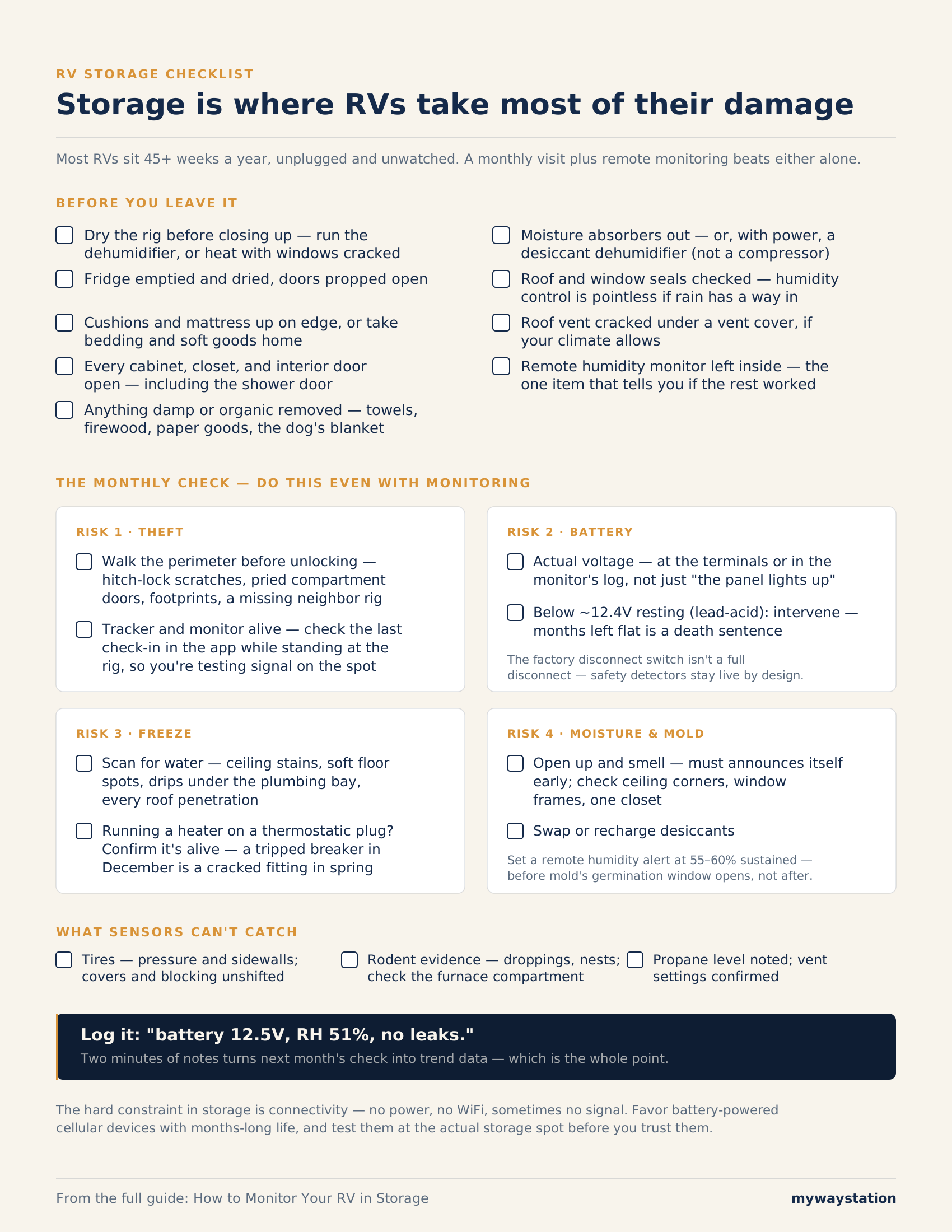
Printable one-pager — the full PDF is free with the email signup in our storage guide.
Monitoring: the number you never see
Prevention can fail; monitoring tells you in November instead of April — a weekend of dehumidifier instead of a new mattress.
Cheap hygrometers drift. The $10 wall units start around ±5% RH and drift worse with age; sub-$15 units routinely test above 10% error, versus ±2–3% for a decent AcuRite or ThermoPro — the difference between reading 55% and sitting at 62%, "fine" versus "germinating." Before trusting the number, buy a unit with a published accuracy spec or salt-test your cheap one.
A local reading in a stored rig is a diary, not an alarm. You want an RV humidity monitor that sends you the number — a cellular or connected sensor that alerts you past a threshold. It won't catch water on the floor; that's a job for water leak detectors. We've compared hardware in our RV monitoring systems roundup; our guide to monitoring an RV in storage covers storage lots' no-power-no-WiFi problem; tinkerers can roll their own with a Home Assistant build and a $15 sensor.
Set it at 55–60% sustained — warned before the germination window opens.
FAQ
What humidity level should an RV be kept at? 30–50% per EPA guidance, below 60% at all costs — above 60%, spores can germinate within a day or two; long stretches below 30% crack trim and dry out seals.
Will a dehumidifier work in a cold stored RV? Compressor, barely — it ices below about 50–60°F. Desiccant, yes — rated capacity to around freezing (the EcoSeb DD122 is rated to about 34°F), the right type for powered winter storage. Without electricity, no powered unit helps — absorber territory.
Is DampRid enough to keep an RV mold-free? In unpowered storage, usually — a tub's few pounds over several months matches a sealed, empty rig. Living aboard, no — occupants make liters a day.
Does a propane furnace cause condensation in an RV? Not the built-in furnace — it's sealed and vented outside. Portable catalytic and "Buddy"-style heaters and the stovetop dump their combustion moisture (about 1.6 pounds of water per pound of propane, roughly 0.8 gallon per gallon) inside.
Why is there moisture under my RV mattress? Body vapor migrates through the mattress all night and condenses on the cold plywood platform where no air moves — the most common first site of RV mold. Fixes: airflow spacers (Hypervent-style matting or slats), standing the mattress up in storage, humidity in range.
How do I get rid of mold smell in an RV? The smell means active or recent growth — find it: mattress underside, exterior-wall closets, window tracks, behind cushions, basement. Clean small patches on hard surfaces; porous materials with established growth generally need replacement. Then fix the humidity, or it comes back.
Bottom line
An RV makes moisture faster than any house and forgives it more slowly. Hold 30–50%. Compressor warm, desiccant cold, absorbers only without power. Ventilate when you make steam. Never store a rig without drying it first and leaving a sensor that can tattle — mold needs about 48 damp hours, and storage gives it five silent months.
Stay in the loop
Occasional updates from the road and the workbench — what we're learning, what we're building. No spam, easy out.