
Safety
RV Propane Detectors: Why Yours Keeps Going Off (and What Actually Sets It Off Besides Propane)

It's 3am, the propane detector is shrieking, and there's no rotten-egg smell anywhere. Two nights later: again.
Forums have hosted this thread for fifteen years — "Propane detector goes off in the early AM", "What else beside Propane will set off the detector?" — and one owner's 2024 fifth wheel fired at 5am twice, no leak found; prime suspect, the cat's litter box (see #5). An RV propane detector going off is almost always one of eight causes — most not propane.
A propane alarm is real until you've proven otherwise. Propane leaks kill people; the detector errs loud on purpose.
First: how to tell a false alarm from a real leak
You smell gas — or you're not sure
Rotten eggs or skunk, especially low near the floor (propane pools). No switches, no flames: everyone out, windows open on the way, tank valve off unless the leak is at the tank itself, report it from a safe distance. Full steps below.
No smell, no appliance running — but verify
Do the soap-bubble test: dish soap and water brushed on every fitting with the tank valve on. Growing bubbles = leak. No bubbles, no smell? Now you may be annoyed instead of alarmed — see the eight usual suspects below.
Propane is odorless; the added ethyl mercaptan smells like rotten eggs or skunk. Smell gas, or not sure? Treat it as real:
- No switches, no flames — lights on or off, fans, phones: any can spark.
- Everyone out — people and pets.
- Open the door and windows on your way out; leave them open.
- Propane off at the tank (clockwise) — unless the leak is at the tank; then stay clear.
- Report it from a safe distance: 911 or the fire department, then your propane supplier.
- Stay out until the alarm stops and the smell is gone. Can't find the cause? Get a technician to pressure-test before using propane again.
No smell, no appliance running? Soap-bubble-test the fittings anyway (tank, regulator, appliance connections); a handheld sniffer is faster — u/Laina_rg on r/RVLiving keeps one aboard. Combined LP/CO unit? CO is a different problem — see our RV carbon monoxide detector guide.
The 8 things that set off an RV propane detector besides propane
Most RV propane detectors use a metal-oxide sensor that reacts to many combustible gases — methane, hydrogen, butane, alcohol vapors, solvents — not just propane. It errs toward caution on purpose.
1. The detector is old and telling you it's dying
The number-one forum answer, and the one people check last. RV propane detectors (listed to UL 1484) have a 5-year sensor life on common Safe-T-Alert and RVSafe units. At end-of-life the unit is designed by its manufacturer to chirp or flash an error code no matter what's in the air — no recalibrating, only snoozing (Safe-T-Alert: 72 hours at a time, 30 days max, then locked until replaced).
Check the printed date first — on Safe-T-Alert the 5 years run from installation. Past due, or no idea? Replace it: an expired sensor is unreliable in both directions.
2. Low or unstable 12V battery voltage
Per MTI's manuals, Safe-T-Alert units run normally down to about 8 volts; below that they trip a malfunction alarm — alternating red/green LED, a beep every 15–30 seconds — that owners mistake for a gas alert. The 3am answer: furnace cycling all night, nothing charging, battery at its overnight low — not haunted, undercharged. If your RV propane alarm keeps going off while boondocking or after shore power drops, check voltage first. (Quiet shore-power loss is its own problem: shore power loss alerts.)
3. Hydrogen off-gassing from your batteries
Too much charging, the mirror of #2. Charging lead-acid batteries (flooded especially; AGM reported too) vent hydrogen — a combustible gas — and a bank gassing in a poorly vented compartment trips the alarm, zero propane involved. Suspect it when alarms match sunny afternoons on shore power. Fix venting and charging, not the detector.
4. Aerosols, hairspray, and cleaning products
Hairspray is the celebrity offender, but any aerosol or solvent — sunscreen spray, deodorant, air fresheners, degreasers, insect repellent — carries vapors the sensor notices. Worse, silicone-containing sprays can permanently degrade it: MTI warns cleaning agents or waxes "may damage the sensor," and siloxane research shows poisoned metal-oxide sensors miss real gas while false-alarming more. A season of weekly hairspray may mean replacement.
5. Off-gassing from new materials — carpet, adhesives, even pet food
New and renovated rigs off-gas VOCs from carpet, flooring, adhesives, and cabinetry for weeks — mystery alarms that fade as they air out. Also what you bring in: oil-based paint, solvent-cleaned parts, and — no joke, per multiple forums — a fresh bag of pet food by the detector.
6. Heat, humidity, and condensation
Metal-oxide sensors drift with their environment. Humidity, temperature swings, and condensation — coastal camping especially — push a sensor (especially old ones) into nuisance territory. Alarms that track weather, not activity, point here.
7. Dust, pet hair, and general floor-level grime
Ankle height is where dust and pet hair collect; a clogged grille false-alarms more. Vacuum the detector's face every few weeks — brush attachment, no sprays (see #4).
8. Dog flatulence. Genuinely.
Best-documented for last: the 80-pound Lab who sleeps hindquarters-against-the-detector and trips it; the dog who ate sausage and "broke wind with amplitude" next to a Leisure Travel Van's sensor. It's chemistry: flatulence delivers methane and hydrogen — in the sensor's range — warm at floor level. Move the dog bed, not the detector.

Why RV propane detectors are mounted low
Propane is roughly 1.5 times heavier than air — a leak sinks and fills the rig from the floor up. That's why NFPA 1192 requires a UL 1484-listed detector in every RV with a propane appliance, installed per its listing — which puts it low: Safe-T-Alert units specify 4 to 20 inches off the floor.

Propane fills the rig from the floor up, so its detector sits low; CO mixes evenly and follows different placement rules.
Never move a propane detector up the wall to dodge the dog or dust — mounted high, it alarms late or never — and when you sniff for a leak, sniff low.
How long do RV propane detectors last — and how to replace one
About 5 years — and the unit tells you when. A 2021-or-older RV on its factory detector is due. RV propane detector replacement is an easy DIY job — most units are hard-wired to 12V, just two wires.
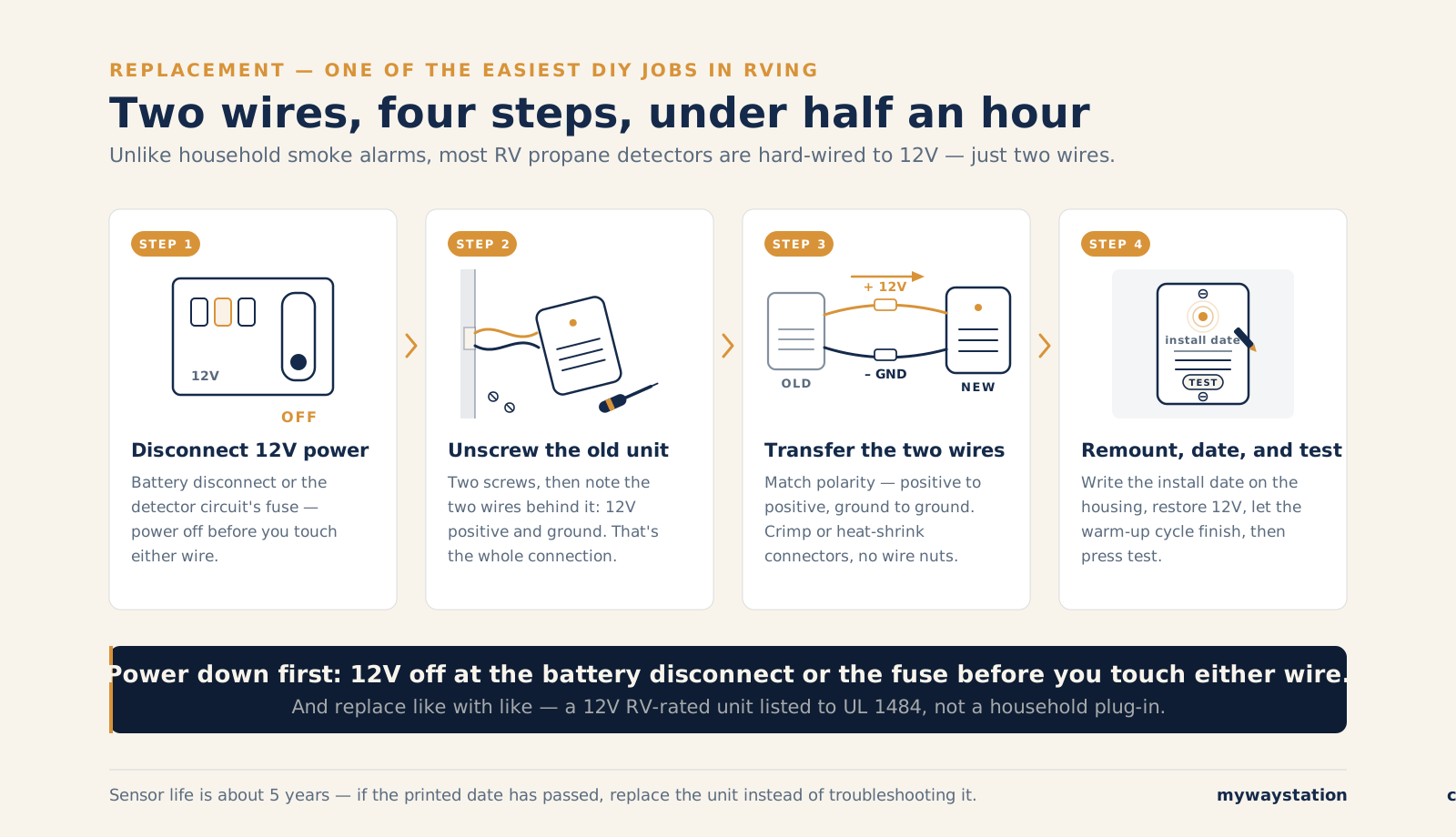
12V off, two screws out, two wires over (polarity matched), a dated and tested unit back on the wall — real photos once hardware is in hand.
- Buy a 12V RV-rated unit listed to UL 1484 (household plug-ins can't take RV vibration, temperature swings, or 12V power). Safe-T-Alert 30/35 series and RV Safe fit most existing holes; roughly $50–$85 street, propane-only or dual LP/CO.
- Disconnect 12V power (battery disconnect or the detector's fuse).
- Unscrew the old unit; note the two wires — 12V positive and ground.
- Connect the new unit — match polarity; crimp or heat-shrink connectors, no wire nuts (vibration).
- Restore power and test. The unit warms up first — a couple of minutes for the gas sensor, up to ten for the CO side of a combo. Press test and date the housing.
No detector at all? Previous owners have "solved" false alarms with wire cutters — install one this weekend, and never fix a false alarm by unplugging.
The uncomfortable part: an alarm is only as good as someone hearing it
A propane detector is a local alarm — an 85-decibel siren for whoever is inside. In storage or while you're out, it screams until the leak disperses or the battery dies, and you learn about it never. Local is its job; the gap is the system: RV safety devices assume an occupant, and RVs spend most of their lives unoccupied. Remote monitoring closes it — propane, power, and temperature alerts on your phone. See our best RV monitoring systems guide and, for rigs that sit unattended, the storage monitoring guide.
FAQ
Why does my RV propane alarm keep going off in the middle of the night? Usually low voltage — your battery bottoms out overnight, and below about 8 volts Safe-T-Alert units trip a beeping malfunction alarm — or an expired sensor chirping end-of-life warnings. Check voltage and the printed date. Smell rotten eggs? Get out first.
Can a dog fart really set off a propane detector? Yes — well documented. Flatulence contains methane and hydrogen, combustible gases the sensor detects at floor level where it lives. Move the dog bed, not the detector.
How long do RV propane detectors last? About 5 years on common Safe-T-Alert and RVSafe units, then end-of-life chirps it can only briefly snooze. Replace by the printed date even if it seems fine.
Why is the propane detector on the floor of my RV? Propane is about 1.5x heavier than air and pools at the floor; detectors mount low to meet the gas first — don't move one higher to dodge false alarms.
How much does it cost to replace an RV propane detector? Roughly $50–$85 street for a 12V RV-rated (UL 1484) unit, propane-only or dual LP/CO. A two-wire DIY job, under half an hour.
Can I just disconnect my RV propane detector if it keeps false alarming? No. A chronic false alarmer is telling you something — expired sensor, sagging voltage, gassing batteries — each with a fix. Propane plumbing with no working detector is a bet you don't want while you sleep.
How do I know if my propane alarm is a real leak? Sniff low for rotten eggs, check for a running propane appliance, soap-test the fittings. Any smell or doubt: everyone out, tank valve off (unless the leak is at the tank), 911 or your supplier from a safe distance, pressure-test before reuse.
Bottom line
A propane detector that keeps going off is a paranoid sensor at ankle height, where the dust, the dog, and the battery fumes live. Rule out a real leak first; then check age and voltage, the causes of most false alarms. Replace on schedule, keep it low, and if your rig sits empty, remember: the loudest alarm only works if someone's there to hear it.
Stay in the loop
Occasional updates from the road and the workbench — what we're learning, what we're building. No spam, easy out.