
Power & electrical
RV Surge Protectors & EMS Units: The Complete Guide (30 Amp, 50 Amp, and What Actually Kills Your Electronics)

The campground pedestal is the least trustworthy outlet you'll ever use: lowest-bidder wiring, sun-baked for fifteen years, forty rigs sharing one transformer in July. Your RV is full of voltage-sensitive gear — residential fridge, AC compressors, inverter/charger, control boards everywhere.
An RV surge protector or EMS stands between those two facts. Below: what each device does, what bad power breaks, and how the big three compare — published specs plus hundreds of owner reports from iRV2, Forest River Forums, and RV Facebook groups (no hands-on lab yet).
The short version:
- A basic surge protector handles voltage spikes only — the rarest campground problem.
- An EMS (Electrical Management System) also cuts power on low voltage, open ground, open neutral, and reverse polarity — the faults that actually happen. Buy an EMS.
- 30 amp and 50 amp are different services — a 50-amp RV gets 3.3x the power. Match protection to your RV's plug.
30 amp vs 50 amp: it's not just "more power"
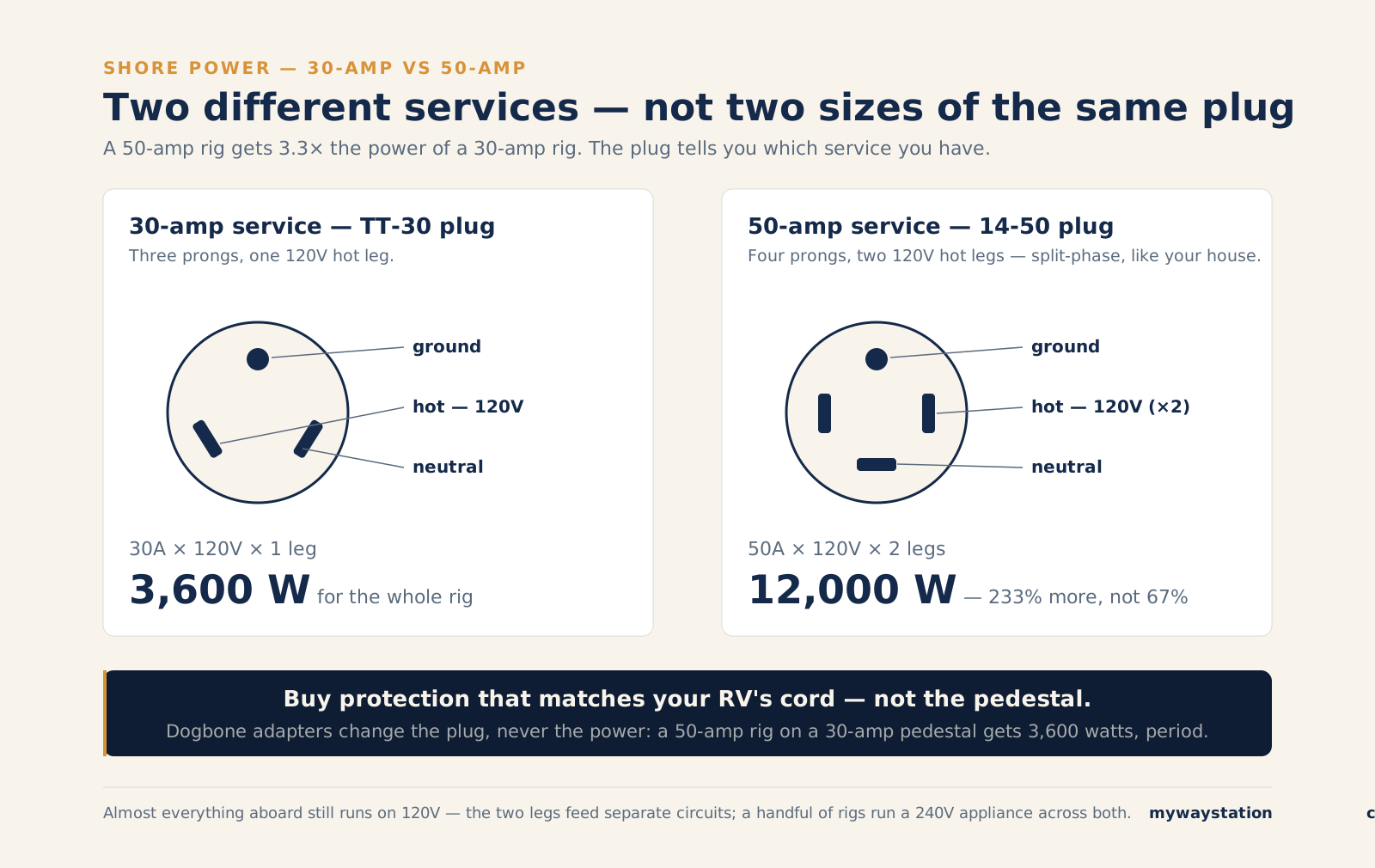
Two services, not two sizes — match protection to the RV's cord, not the pedestal.
A 30-amp RV uses the three-prong TT-30 plug: one 120-volt hot leg. 30 × 120 = 3,600 watts total — why it can't run two ACs and a microwave at once.
A 50-amp RV uses the four-prong 14-50 plug: two 120-volt hot legs, split-phase like your house. 50 × 120 × 2 = 12,000 watts — 233% more.
Buy a 30 amp RV surge protector or EMS for a 30-amp rig, a 50 amp RV surge protector or EMS for a 50-amp rig — match the cord, even through an adapter.
What a basic surge protector actually protects against (spoiler: one thing)
A basic surge protector — the $60–100 kind — is a box of MOVs (metal oxide varistors) that sacrifice themselves absorbing brief voltage spikes: nearby lightning, grid transients. The joule rating is how much spike energy it can eat.
What it does not protect against: low voltage (brownouts), sustained high voltage, open ground, open neutral, reverse polarity, and generator frequency faults. That list is what actually goes wrong at pedestals — real surges are rare, but 104 volts on a hot afternoon is a Tuesday, and a basic unit passes it straight through.
Better than nothing. Not close to enough.
Surge protector vs EMS: what the extra money buys
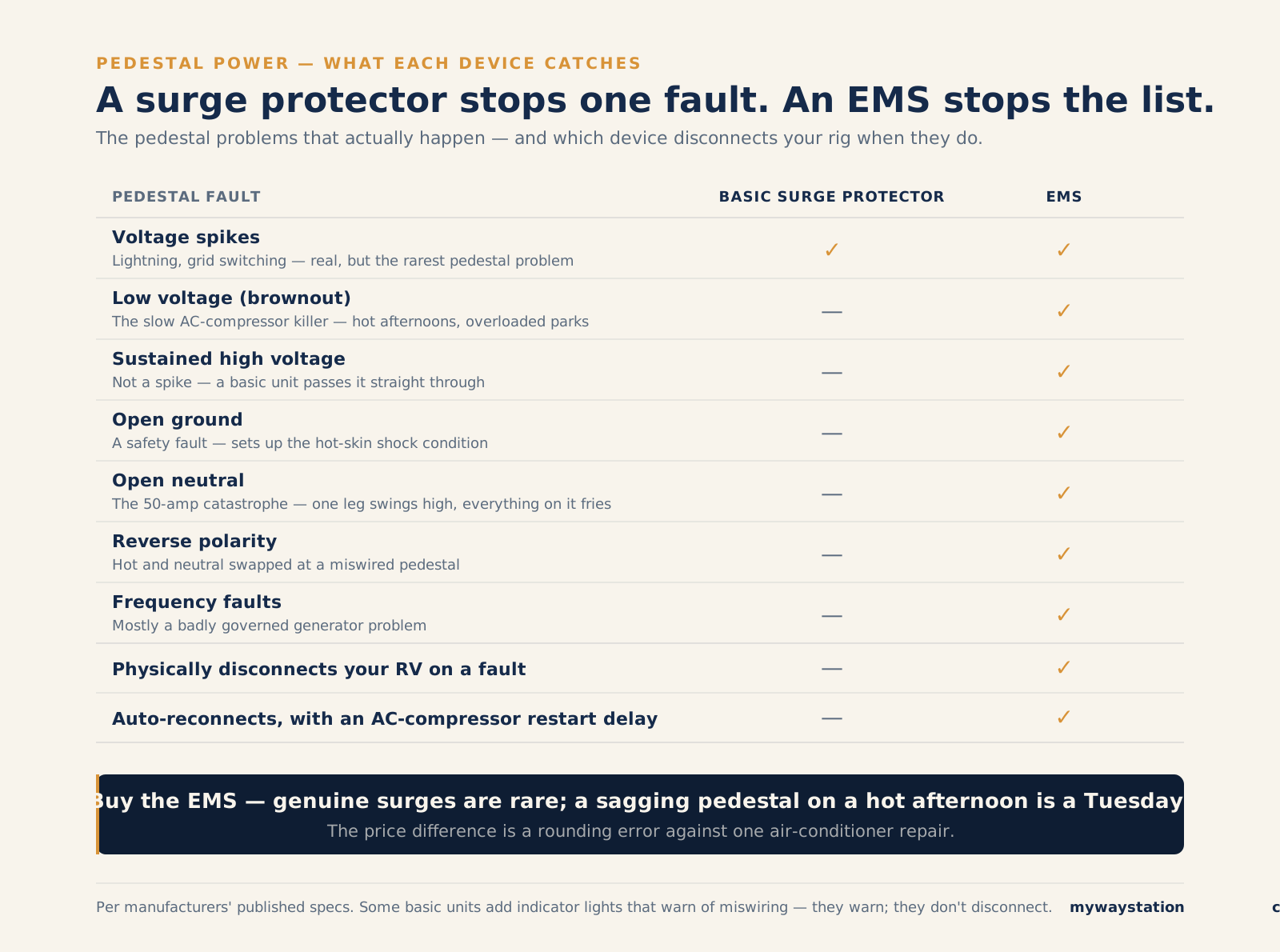
Which device disconnects your rig when pedestal faults actually happen.
An EMS — Electrical Management System, Progressive Industries' term; Southwire says "Total Electrical Protection" — pairs the same MOVs with a microprocessor and a contactor (a big relay) that physically disconnects your RV when something's wrong. Published specs across the big three:
- Low voltage — cuts off below 102V (Southwire) or 104V (Progressive, Hughes); reconnects on recovery
- High voltage — cuts off above 132V on all three (Progressive reacts within 60 ms above 156V)
- Miswired pedestals — open ground (a shock hazard — see hot-skin below), open neutral (the 50-amp catastrophe), reverse polarity, generator frequency faults
- AC restart delay — waits after any disconnect (90 s Hughes, 128 s Southwire, 136 s Progressive) so the AC's head pressure bleeds off before restart
That's the whole value: an RV EMS refuses to feed bad power to your rig and reconnects when the pedestal behaves. The upgrade costs roughly $150–250 — less than the parts bill on one rooftop AC.
What bad pedestal power actually does to your RV
Low voltage kills air conditioners. A compressor is an induction motor; at lower voltage it draws more current and runs hotter. Forums are full of compressors that died after a brown-out summer; nothing dramatic happens at 105V — that's the danger. This is what RV low voltage protection is for.
Open neutral destroys everything at once. On 50-amp service the neutral keeps each leg at 120V. When it fails, the legs become a voltage divider across 240V: the lightly loaded leg swings far above 120V and everything on it sees the overvoltage at once. The most destructive common fault in RV electrical — and not a spike, so a $99 surge protector shrugs. An EMS opens the contactor.
Hot-skin: the fault that shocks you, not your electronics
For RV electrical safety, read Mike Sokol of RVelectricity — his explanation of hot-skin voltage is the canonical one.
A hot-skin condition puts your RV's skin and chassis at AC voltage above the ground you're standing on — touch the rig and you're in the circuit. It takes chassis leakage (a chafed wire, a failing water heater element) plus a bad or missing ground. Sokol's numbers: a few volts is normal; ~5+ volts means a grounding problem; 30–40 volts can kill with wet hands and damp ground. He's also documented "reflected" hot-skin: a bad campground ground letting one RV's fault energize every rig on the circuit.
So an EMS that won't pass power without a ground is a safety device. Per Sokol, wave a ~$30 non-contact voltage tester (Fluke VoltAlert style) at the rig at every new hookup.
Portable vs. hardwired
Portable units plug in at the pedestal: cheaper, zero installation, movable between rigs — but stealable (use the lock loop), with the display outside. Hardwired units mount inside, ahead of the panel: theft-proof, weatherproof, always working, usually with an interior remote display. Similar price; the real cost is installation.
The honest call: hardwired if you camp a lot; portable if you're seasonal, switch rigs, or want it solved today.
Dogbone adapters — where protection meets reality
A dogbone adapter mates mismatched plugs — 50-amp RV into 30-amp pedestal, 30-amp RV into household outlet. Three rules:
- It changes the plug, not the power. A 50-amp rig on a 30-amp pedestal gets 3,600 watts.
- The EMS matches your RV. Stack: pedestal → dogbone → EMS → shore cord.
- Buy decent ones. Bargain dogbones are a known melting point; get heavy, name-brand adapters with molded strain relief.
The big three, compared on published specs
| Progressive Industries | Southwire Surge Guard | Hughes Power Watchdog | |
|---|---|---|---|
| Portable 30A | EMS-PT30X, ~$170 street, 1,790J | 34930/34931, 2,450J | PWD30-EPO, $349.99, 3,000J |
| Portable 50A | EMS-PT50X, ~$200 street, 3,580J | 34950/34951, 4,200J, ~$400 street | PWD50-EPO, $399.99, 6,100J |
| Hardwired versions | EMS-HW30C / EMS-HW50C (remote display included) | Yes (35530/35550) | Yes, 30A & 50A |
| Remote visibility | Scrolling display on the unit; hardwired models ship with a wired remote display | Onboard LCD; Bluetooth app on 34931/34951, plus optional 40301 wireless LCD ($65.99 list, ~$44 street) | Bluetooth app standard; Gen II adds WiFi |
| Warranty | Limited lifetime | Limited lifetime, with connected-equipment coverage on models like the 34951 | Limited lifetime; replaceable surge module (one free within 2 years) |
Hughes prices are MSRPs from powerwatchdog.com; "street" prices are July 2026 retail and move constantly.
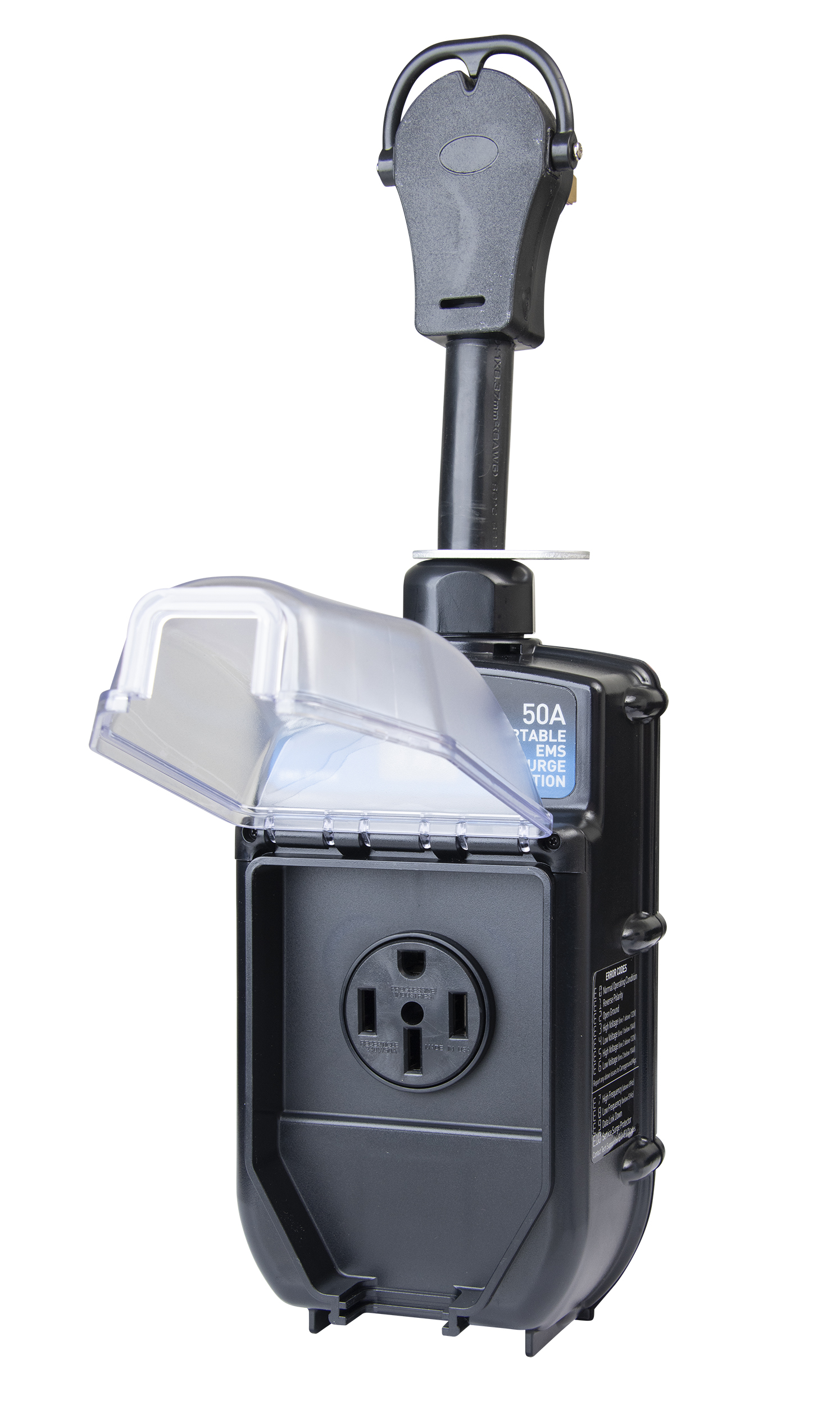
Image: Progressive Industries (Navico Group), https://www.navico.com/progressive-industries
Progressive Industries is the incumbent — "EMS" as a category name is essentially theirs, with a decades-long just-works reputation and a real lifetime warranty. The knock: least connected; its scrolling display was great engineering in 2012, and feels like it in 2026.
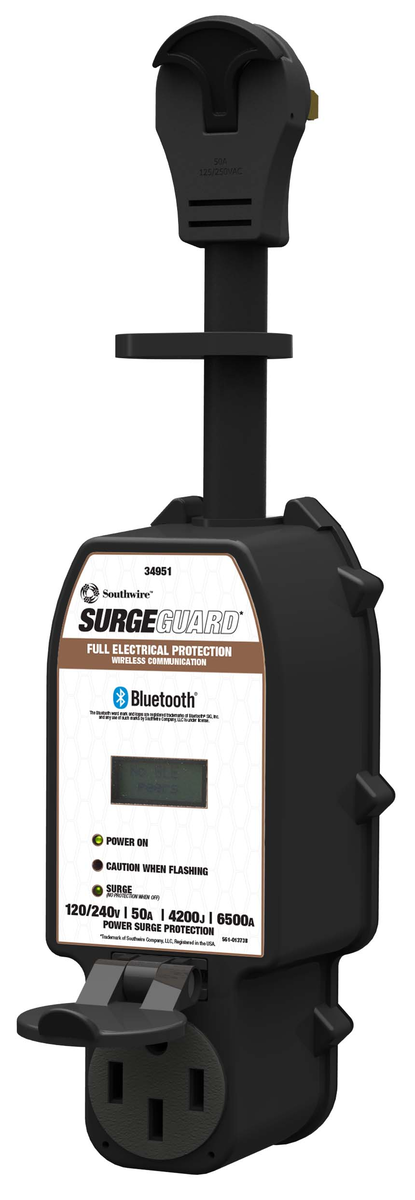
Image: Southwire (Surge Guard), https://www.southwire.com/power-management/recreational-power/50a-portable-surge-guard-wireless/p/34951
Southwire Surge Guard is the warranty heavyweight: models like the 34951 carry limited lifetime plus connected-equipment coverage — if the unit fails to protect your gear, Southwire pays for the damage. Caution: cheaper units like the 44280 catch miswired pedestals and surges but don't watch voltage; the model number matters more than the brand.
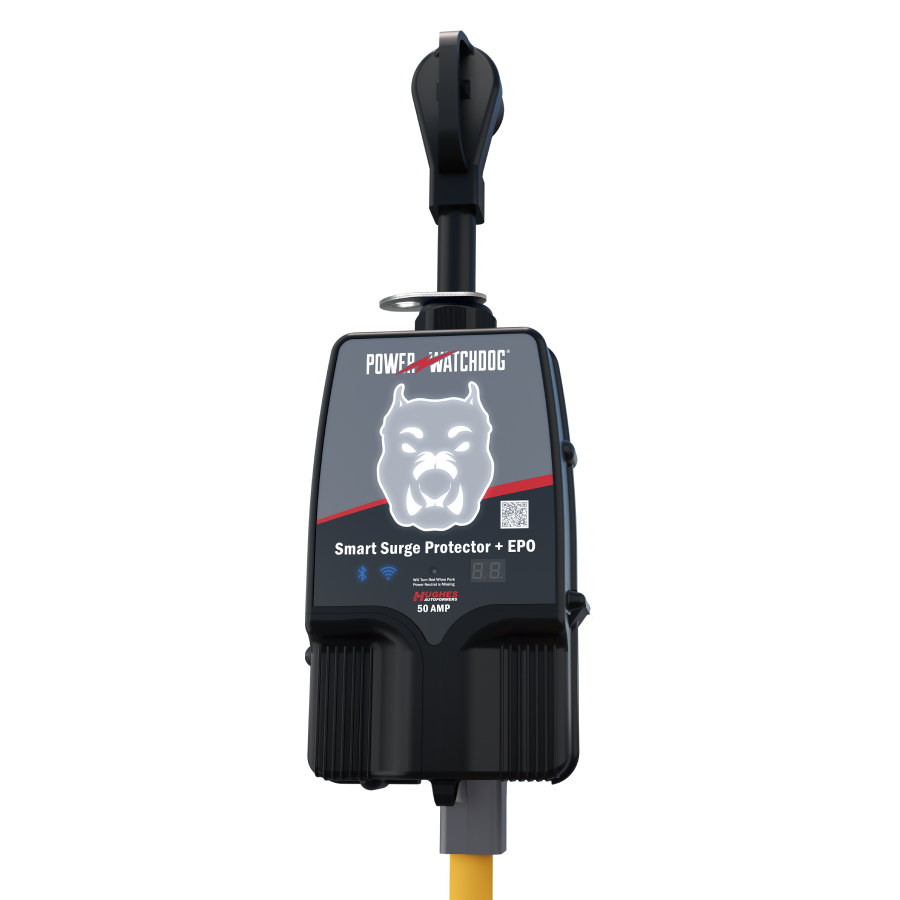
Image: Hughes Autoformers (Power Watchdog), https://www.powerwatchdog.com
Hughes Power Watchdog is the modern one: live voltage, amps, and watts in a Bluetooth app, WiFi on Gen II. The EPO ("Emergency Power Off") models are the true EMS units, with the highest joule ratings here — base models are surge-only — and the surge module is user-replaceable. Hughes also sells the Autoformer, a voltage booster for chronically low-voltage parks.
Owner reports don't show any of the three missing real faults — the honest differences are visibility, warranty, and format.
The gap nobody's closed: your EMS protects silently
An EMS is a local device with a local response. When the pedestal browns out while you're at the beach, it does its job — disconnect, wait, retry — but nothing tells you. The AC is off, the fridge is warming, the dog's clock is running; you find out hours later, at the pedestal, reading an error code. Even the Watchdog's app is Bluetooth-first: great at the picnic table, useless across town without Gen II WiFi and working campground WiFi.
Protection and awareness are different products: the EMS keeps bad power out but can't tell you the rig has no power at all. Pair it with something that watches power and temperature and reaches you anywhere: see shore power loss alerts (power loss is the first domino in most RV emergencies), the best RV monitoring systems, or a Home Assistant smart-RV setup for tinkerers.
FAQ
What's the difference between an RV surge protector and an EMS? A surge protector only absorbs brief voltage spikes; an EMS also monitors continuously and physically disconnects your RV on low voltage, high voltage, open ground, open neutral, and reverse polarity.
Do I really need a surge protector for my RV? Yes — but make it an EMS: one open-neutral event on a 50-amp rig can destroy ten times the device's cost in a minute.
Can I use a 50-amp surge protector on a 30-amp RV? Match the protector to your RV's cord — a 30-amp EMS for a 30-amp RV, 50 for 50; dogbones handle mismatched pedestals.
Why does my EMS keep shutting off power at the campground? Probably pedestal low voltage at peak afternoon AC load, not a broken unit. If the error code repeatedly says low voltage, the fix is a different site, a Hughes Autoformer-style booster, or a different park.
Will a surge protector protect against low voltage? A basic one, no — low-voltage protection is exactly what separates an EMS from a plain surge protector, and low voltage is the fault most likely to slowly kill your air conditioner.
What happens if the campground pedestal is wired wrong? An EMS refuses to pass power and shows why; a basic protector's lights tell you if you look; nothing at all leaves the rig energized — one path to hot-skin. Wave the tester at every hookup, per Sokol.
Portable or hardwired — which is better? Hardwired if you camp a lot: theft-proof, always on duty. Portable for zero installation or multiple rigs. Same protection electronics either way.
Bottom line
Skip the basic surge protector; buy a true EMS sized to your RV's cord — roughly $170–380 for 30-amp, $200–450 for 50-amp at street prices. Progressive Industries for the track record, Southwire for the connected-equipment warranty, Hughes Power Watchdog for the data on your phone. Add the $30 tester to the plug-in ritual.
A bodyguard, not a messenger: the EMS takes the hit every time, silently. Knowing it happened while you're forty minutes away and the fridge is warming? Different problem.
Stay in the loop
Occasional updates from the road and the workbench — what we're learning, what we're building. No spam, easy out.